
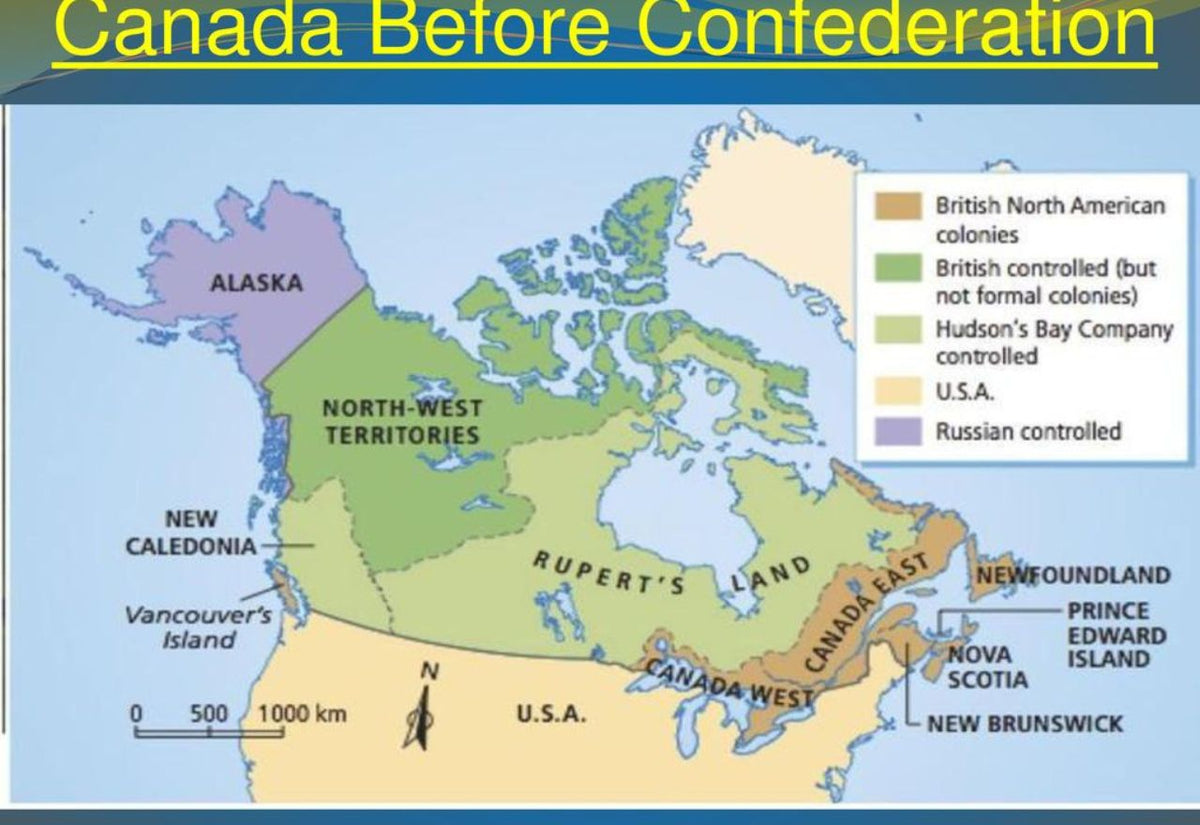
Confederation was not a single meeting, a single idea or an inevitable next step. It emerged from a particular mix of political deadlock, economic ambition, defence concerns and debates over how different colonies could share a central government without giving up control of local matters.
A federation starts to look practical
By the early 1860s, the Province of Canada—Canada West and Canada East, roughly today’s Ontario and Quebec—had become difficult to govern through its existing political structure. At the same time, leaders across British North America were thinking about trade, transportation, defence and the advantages or risks of larger political unions.
The federal model offered a possible compromise: a central government could handle common national questions while provincial governments retained responsibility for many local matters. That division of powers would become one of the defining features of the country created in 1867.
Charlottetown changes the scale of the conversation
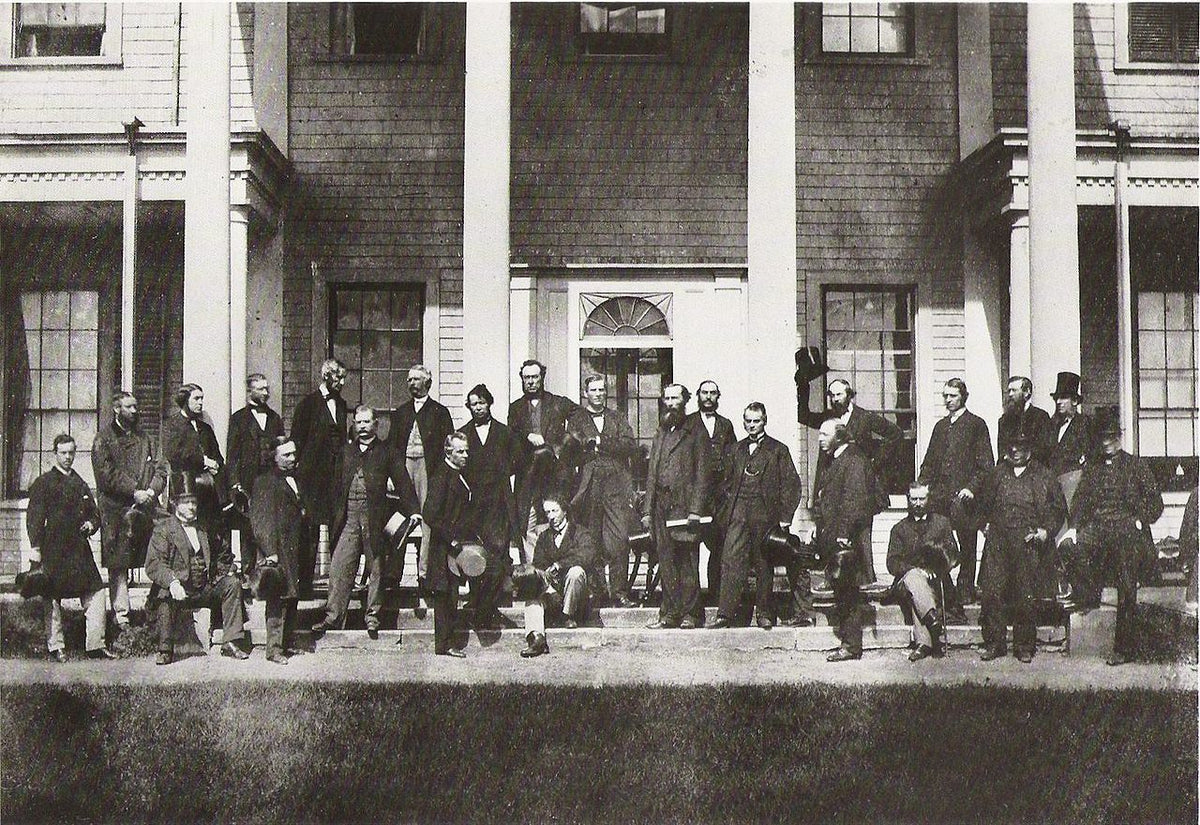
The September 1864 meeting in Charlottetown was originally intended to explore a Maritime union involving Prince Edward Island, Nova Scotia and New Brunswick. Delegates from the Province of Canada joined the discussions and argued for a broader federation.
Twenty-three delegates took part. They discussed finances, representation, the balance between central and regional authority, and the structure of a future Parliament. Charlottetown produced no formal set of resolutions, but it did produce enough agreement to justify a second conference.
Québec turns an idea into a framework
Delegates reconvened in Québec City in October 1864. Over 16 days, 33 representatives debated the shape of a proposed federal union and produced the 72 Resolutions. Those resolutions outlined the broad constitutional structure that would later inform the British North America Act.
Not every colony moved forward. Prince Edward Island and Newfoundland ultimately stepped away from the process at that stage, while the Province of Canada, New Brunswick and Nova Scotia continued toward union.
London and the British North America Act
A final conference in London in late 1866 refined the proposal into legislation for the British Parliament. The British North America Act received Royal Assent in March 1867 and took effect on July 1, creating the Dominion of Canada from Ontario, Quebec, New Brunswick and Nova Scotia.
Who was not at the table
The political conferences that produced Confederation were meetings of colonial governments. Indigenous peoples were not represented in the Charlottetown, Québec or London negotiations, despite existing treaty relationships and long-standing political and military alliances with the Crown. That exclusion matters when the story is told today because the new federation developed on lands already occupied, governed and used by Indigenous nations.
Why Confederation still matters
The country created in 1867 was only the beginning of modern Canada. More provinces and territories joined later, constitutional relationships continued to evolve, and debates over federal and provincial authority never really stopped. The useful part of the Confederation story is not that everyone suddenly agreed—it is that a federal structure was built to manage disagreement among regions with different interests.
Sources & further reading:
Parks Canada — Charlottetown and Québec Conferences of 1864
Government of Canada — Federalism in Canada
Department of Justice Canada — Indigenous peoples and Confederation

Leave a comment
This site is protected by hCaptcha and the hCaptcha Privacy Policy and Terms of Service apply.